


Getting a moving quote sounds simple.
You tell a moving company where you are moving, how many bedrooms you have, and they give you a price.
But that is usually not enough information for an accurate estimate.
A three bedroom home can have 25 boxes or 125 boxes. One apartment may have an elevator and easy truck access. Another may have three flights of stairs and a long walk from the building to the street.
Same number of bedrooms.
Completely different move.
If you want an accurate moving quote, the goal is not simply to get a number. The goal is to help the moving company understand what moving day will actually look like.
The better the information, the better the estimate.
This guide walks through exactly how to get a moving quote that holds up, so your final bill matches the estimate.
Start With a Complete Moving Inventory
Instead of saying:
go room by room.
Include:
- beds
- dressers
- nightstands
- sofas
- sectionals
- chairs
- dining tables
- desks
- TVs
- bookcases
- cabinets
- patio furniture
- appliances
- exercise equipment
- garage items
- storage bins
- boxes
Do not forget areas that are easy to overlook.
The basement counts.
The garage counts.
The attic counts.
The patio counts.
The storage room counts.
If it is going on the moving truck, it belongs in the moving estimate.
Be Realistic About Your Box Count
Boxes are one of the most commonly underestimated parts of a move.
At the beginning of packing, you may think:
Then the kitchen gets packed.
Then the closets.
Then the garage.
Suddenly there are 60.
If your move is still several weeks away, tell the relocation specialist that you are not fully packed yet.
A good estimate can account for an expected number of additional boxes.
It is better to say:
That gives the moving company a much clearer picture.
Show the Moving Company Your Home
For larger moves, a visual estimate can make a big difference.
Consider:
- an in home moving estimate
- a virtual moving estimate
- a video walkthrough
- photos of furniture and rooms
A visual survey allows the estimator to see details that may be difficult to describe over the phone.
For example, you may call something:
The estimator may see a huge six piece sectional with a sleeper mechanism.
Or you may describe:
A video may reveal shelving, tools, bicycles, storage bins, lawn equipment, and an extra refrigerator.
Do Not Forget the Garage, Basement, Attic, or Shed
These areas can completely change the size of a move.
A garage may contain:
- tools
- shelving
- bicycles
- lawn equipment
- cabinets
- storage bins
- workbenches
- grills
A basement may have:
- additional furniture
- holiday decorations
- boxes
- exercise equipment
- appliances
- storage racks
When customers search for how to get an accurate moving estimate, one of the simplest answers is:
Do not estimate only what you see in the main living areas.
Mention Heavy and Specialty Items
A moving company needs to know about heavy items before moving day.
Examples include:
- safes
- pianos
- pool tables
- large refrigerators
- treadmills
- exercise machines
- marble tables
- oversized furniture
- commercial equipment
- antiques
- large toolboxes
These items may affect:
- crew size
- equipment
- labor time
- truck space
- specialty handling
A 300 pound safe discovered on moving day is very different from a safe included in the original moving plan.
If you are unsure whether something counts as a specialty item, mention it anyway.
Access Matters More Than Most Customers Realize
Two identical inventories can take very different amounts of time to move.
Imagine one customer has:
- driveway parking
- first floor access
- wide front doors
The second customer has:
- third floor apartment
- no elevator
- narrow staircase
- truck parking down the street
The furniture may be exactly the same.
The labor is not.
For a more accurate local moving quote, tell the moving company about:
- stairs
- elevators
- long hallways
- long carries
- narrow doorways
- steep driveways
- difficult parking
- loading docks
- gated properties
- building restrictions
These details help the company estimate labor time more realistically.
If There Is an Elevator, Explain How It Works
Simply saying:
does not always tell the whole story.
Ask yourself:
- Is it a freight elevator?
- Does it need to be reserved?
- Is there a specific moving time?
- How far is the elevator from the apartment?
- How far is the elevator from the truck?
- Will other residents be using it?
- Does the building require a COI?
Elevator moves can still involve significant walking and waiting.
The more the moving company knows about the building, the better they can plan the move.
Tell the Company About Long Carries
A long carry means movers have to walk a significant distance between your home and the truck.
This can happen in:
- apartment complexes
- high rise buildings
- gated communities
- downtown areas
- buildings with limited parking
- homes with long driveways
Customers sometimes forget to mention this because it does not seem like part of the inventory.
But it can absolutely affect moving time.
If you know the moving truck cannot park near the entrance, mention it during the estimate.
Be Clear About Packing
There is a big difference between:
and
If you need packing services, include them when requesting the quote.
Professional movers may offer:
- full packing
- partial packing
- kitchen packing
- TV packing
- mirror packing
- wardrobe boxes
- furniture wrapping
- unpacking
Packing requires labor and materials, so it should be part of the original moving conversation whenever possible.
Ask What Packing Materials Cost Extra
Not every material is automatically included in every moving quote.
Ask about:
- boxes
- tape
- mattress covers
- TV boxes
- mirror boxes
- shrink wrap
- specialty packing materials
- wardrobe boxes
If the moving company provides furniture blankets as part of the service, ask whether there is a charge.
A transparent moving quote should make it clear what is included and what is additional.
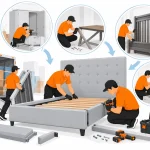
Mention Furniture That Needs Disassembly
Large furniture may require extra time before it can leave the home.
Examples include:
- bed frames
- sectionals
- dining tables
- desks
- large shelving
- wardrobes
- adjustable beds
Standard furniture may be straightforward.
Complicated or specialty furniture may require more time.
If possible, send photos of unusual pieces.
Give the Correct Pickup and Destination Information
Distance matters.
For a local move, provide the correct addresses or ZIP codes.
For a long distance move, accurate pickup and destination information becomes even more important.
Also mention:
- additional stops
- storage stops
- multiple pickups
- deliveries to more than one address
Adding another stop on moving day can change the amount of time and travel required.
It is much easier to plan correctly when all stops are included from the beginning.
Local Moving Quotes and Long-Distance Moving Quotes Are Different
If you are comparing local movers and long-distance movers, understand that pricing may be calculated differently.
Local moves are often based on factors such as:
- hourly labor
- number of movers
- truck
- service fees
- materials
- total moving time
Long distance moving estimates may consider:
- distance
- inventory cubic foot
- shipment size
- packing
- transportation
- delivery requirements
- additional services
Ask the moving company:
That question should have a clear answer.
Update Your Moving Company When the Inventory Changes
Your estimate was prepared three weeks ago.
Since then, you decided to move:
- the basement sofa
- patio furniture
- 20 additional boxes
- garage shelving
- another dresser
That matters.
Do not wait until moving day to update the inventory.
Contact the moving company and revise the estimate.
An accurate quote has to reflect the current move, not the move you originally described several weeks earlier.
Do Not Remove Items From the Inventory Just to Get a Lower Estimate
A lower estimate does not make the actual move smaller.
If you know an item is moving, include it.
Underestimating the inventory may create a cheaper number on paper, but it does not create a cheaper moving day.
The truck still needs room.
The movers still need time.
The furniture still needs to be carried.
A realistic moving quote is much more useful than an artificially low one.
Ask How Many Movers the Company Recommends
Crew size can affect both speed and cost.
A smaller move may need two movers.
A larger home may be better suited for three, four, or more movers.
Do not compare hourly rates without comparing crew size.
A quote for:
2 movers + truck
is not the same service as:
4 movers + truck
Ask why the company recommends that particular crew size.
A knowledgeable estimator should be able to explain.
Ask What Could Change the Final Price
This may be the most useful question you ask.
Before booking, say:
The answer may include:
- additional furniture
- additional boxes
- packing materials
- access changes
- extra stops
- heavy items
- more labor time
Now you understand what variables to watch.
That makes the quote much more useful.
Compare Moving Quotes the Right Way
Compare:
- inventory
- crew size
- estimated time
- hourly rate
- minimum hours
- service fees
- packing
- materials
- disassembly
- reassembly
- transportation
- additional charges
If one company is dramatically cheaper, check whether they are estimating the same move.
Sometimes the lowest moving quote is simply missing information.
Questions to Ask Before Accepting a Moving Quote
Before booking a moving company, ask:
These questions help turn a basic quote into a much clearer moving plan.
How Accurate Can a Moving Estimate Be?
No moving company can predict every minute of moving day.
Traffic changes.
Elevators can be slow.
Buildings can create delays.
Customers may add items.
Furniture may take longer than expected to disassemble.
But a detailed estimate based on accurate information can significantly reduce surprises.
That is the real goal.
Not predicting moving day down to the exact minute.
Creating a realistic expectation.
Looking for an Accurate Moving Quote in New Jersey?
Whether you are after a free moving quote for a local move, an accurate moving estimate for a long distance relocation, or an in home or virtual estimate for a larger home, the approach is the same: start with a complete inventory and honest information about your move, and you will get a moving company estimate you can plan around. If you are also weighing how much do movers cost, that same level of detail is what makes the answer reliable.
At Pick & Pack Moving, we provide moving estimates for:
How do I get a moving quote?
Contact a moving company and share the details of your move: your full inventory, the size of your home, your pickup and destination addresses or ZIP codes, and any packing or specialty needs. The more complete your information, the more useful the moving quote.
How do I get the most accurate moving quote?
Start with a complete, room by room inventory, be realistic about your box count, mention heavy and specialty items, and explain access details like stairs, elevators, long carries, and parking. For larger homes, an in home moving estimate or a virtual moving estimate gives the most accurate result.
How can I get a quote for a local moving service?
For a local moving quote, give the moving company your correct addresses or ZIP codes, your full inventory, and the access details at both locations. Local moves are usually priced on hourly labor, crew size, truck, and total moving time, so accurate information keeps the estimate realistic.
Is packing included in a moving quote, or is it extra?
It depends on the company and the quote. Packing requires labor and materials, so it is not always included by default. Ask whether full or partial packing, packing materials such as boxes, tape, TV boxes, mirror boxes, wardrobe boxes, and shrink wrap, and furniture disassembly and reassembly are part of the quote or charged separately. A transparent moving quote makes clear what is included and what is additional.